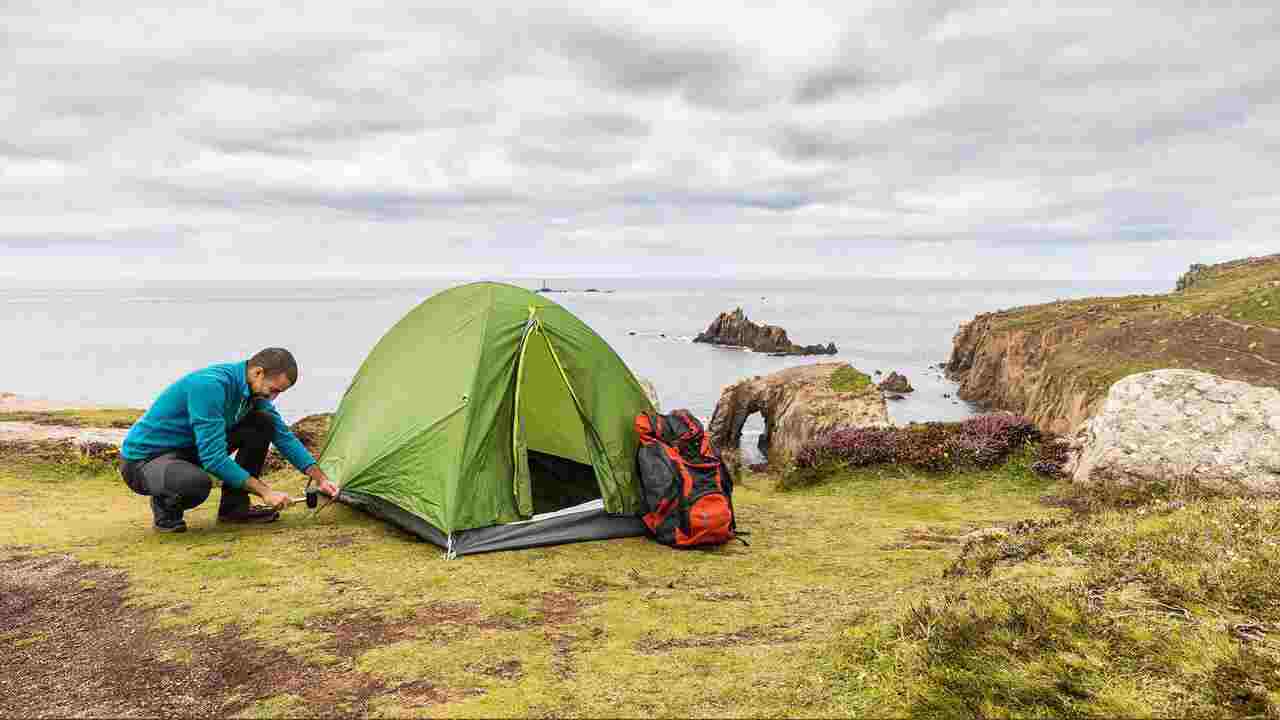
 Ever looked at a photo of someone hanging off a sheer rock face in a tiny tent
and thought, “That looks absolutely insane—I want to try it”? Yeah… me too.
Turns out, sleeping in a tent bolted to the side of a cliff isn’t just a thing
people do—it’s a bucket list experience that’s equal parts terrifying and
magical.
Spoiler alert: I didn’t fall. I barely slept. And I would 100% do it again.
Ever looked at a photo of someone hanging off a sheer rock face in a tiny tent
and thought, “That looks absolutely insane—I want to try it”? Yeah… me too.
Turns out, sleeping in a tent bolted to the side of a cliff isn’t just a thing
people do—it’s a bucket list experience that’s equal parts terrifying and
magical.
Spoiler alert: I didn’t fall. I barely slept. And I would 100% do it again.
What Even Is Cliff Camping?
Let’s start there. Cliff camping—also called portaledge camping—is basically
spending the night on a tiny platform suspended high above the ground, usually
bolted or strapped into a rock face. It started as a tool for rock climbers who
needed to sleep halfway up big wall routes. But now? It’s become a full-on
adventure tourism experience.
You don’t have to be a climber. You just need a sense of adventure, a decent
head for heights, and ideally, zero fear of dangling 1,000 feet above the ground
while brushing your teeth.
Where I Did It
I booked my cliff camping trip in Estes Park, Colorado, right on the edge of Rocky
Mountain National Park. The company running the experience—run by actual
climbers—offered a one-night stay on a vertical rock face with full gear, guides,
and safety equipment.
You hike in, gear up, and rappel down onto the portaledge where you’ll spend the
night. Sounds chill, right?
Yeah. About that.
The Climb In (aka Sweaty Panic
Mode)
The hike to the cliff base was beautiful—think pine trees, chipmunks, and sweeping
views. But once the guide handed me my harness and casually said, “Time to go down,”
I realized this wasn’t just a photo op. I’d be lowering myself down to a platform
the size of a dining table, hanging 500 feet above the valley.
My palms were sweaty. My brain screamed “what are we doing?” But I clipped in,
leaned back into the rope, and rappelled down to what would be my bedroom for the
night.
And honestly? Once I stopped panicking, the view was unreal.
Setting Up Camp (While
Dangling)
The portaledge is basically a heavy-duty fabric cot suspended by metal frames and
climbing anchors. There’s just enough room for two people side by side (cozy, to say
the least). We attached a tarp above for wind protection, clipped our gear to
carabiners, and got comfortable.
“Comfortable” being a relative term. You’re still wearing a harness, still clipped
in at all times, and still hovering hundreds of feet above sharp rocks. But the
adrenaline and the views make it all feel weirdly peaceful.
Dinner with a View (and a Side
of Existential Dread)
Dinner was a pre-packed meal eaten cross-legged on the ledge, with our feet dangling
into nothing. The sun dipped below the horizon, painting the cliffs in gold and
purple. Birds cruised past at eye level. Wind whipped through the valley below.
It was one of the most beautiful—and surreal—moments of my life.
Also, I dropped a tortilla chip and watched it spiral into the abyss for about 40
seconds. RIP, chip.
The Night (a.k.a. Not Much
Sleeping Happened)
Trying to sleep while suspended off a cliff is like trying to nap in a gently
rocking hammock—if the hammock was 500 feet up and you were thinking constantly
about gravity.
The ledge swayed just a little. Every gust of wind made the tarp flap. I woke up
every hour to adjust, check my harness, or just stare at the stars and question my
life choices.
But here’s the thing: I’ve never seen stars like that before. Zero light pollution.
Absolute silence. Just me, my heartbeat, and the entire universe overhead.
It was humbling. And kind of healing, in a weird, sweaty-palmed way.
Waking Up in the Sky
At dawn, the entire cliff turned pink. We unzipped the tarp and watched the sun rise
while sipping instant coffee clipped to the side of a vertical rock face.
Waking up that way—harnessed in, legs dangling into thin air, coffee steaming in
your hands—is a memory that burns itself into your brain forever.
Eventually, we packed up, clipped everything back into our daypacks, and rappelled
down to the base with sore muscles and huge grins.
Would I Do It Again?
Absolutely. It’s not for everyone, sure. If you’re terrified of heights, maybe don’t
sign up tomorrow. But if you want to feel small, brave, overwhelmed, awed, and a
little wild—cliff camping delivers.
It’s not just about the thrill. It’s about unplugging so hard that even your sense
of gravity is questioned. It’s about pushing your comfort zone—then sleeping on the
edge of it.
What to Know Before You Book
-
It’s safe. Seriously.
Professional guides take this seriously. Redundant anchors, constant clipping, and
top-notch gear make it more secure than it looks. -
It’s pricey. Expect to pay $800–$1,200
for a full overnight guided experience. You’re paying for gear, safety,
expertise—and a once-in-a-lifetime view. -
Bring layers. Even in summer, cliffs
get cold at night. -
Peeing is a
thing. There’s a “waste system” involving bags and bottles. It’s
awkward, but manageable. And no, you can’t “just hold it.” -
You’ll remember it forever. Every shaky
laugh, every wind gust, every second of suspended sleep.
Cliff camping isn’t luxurious. It’s not even particularly restful. But it is bold,
raw, and deeply unforgettable.