 If you’ve ever watched Bear Grylls and
thought, “Pfft, I could do that,” then it might be time to test yourself in the
real deal. Picture this: sand stretching to the horizon, no phone signal, no
cozy bed, and no help unless you earn it. That’s what you get with a desert survival course in Morocco.
The Sahara isn’t just for camel rides and sunset selfies. It’s also the ultimate
training ground for those who want to learn how to survive—really survive—off
the grid, off the map, and often, off the edge of their comfort zone.
So, could you make it? Let’s find out.
If you’ve ever watched Bear Grylls and
thought, “Pfft, I could do that,” then it might be time to test yourself in the
real deal. Picture this: sand stretching to the horizon, no phone signal, no
cozy bed, and no help unless you earn it. That’s what you get with a desert survival course in Morocco.
The Sahara isn’t just for camel rides and sunset selfies. It’s also the ultimate
training ground for those who want to learn how to survive—really survive—off
the grid, off the map, and often, off the edge of their comfort zone.
So, could you make it? Let’s find out.
What Is a Desert Survival
Course, Exactly?
Think of it as a crash course in not dying. But also in thriving.
A typical survival course in Morocco’s part of the Sahara teaches you how to find
water, navigate without GPS, build shelter in high heat and cold nights, cook over
an open fire, avoid scorpions, and read the desert like a giant, sand-covered
instruction manual.
Some courses are beginner-friendly; others are military-grade intense. But all of
them are designed to teach practical skills while pushing you physically and
mentally.
This isn’t glamping with a twist. It’s tough, dusty, raw—and wildly rewarding.
Where It Happens
Most courses operate in the
Erg
Chebbi or
Erg Chigaga
regions—two of the most stunning dune systems in Morocco. We’re talking cinematic
dunes, dry riverbeds, rocky plateaus, and ancient nomadic trails.
You’ll usually start in a nearby town like Merzouga or M’Hamid, meet your
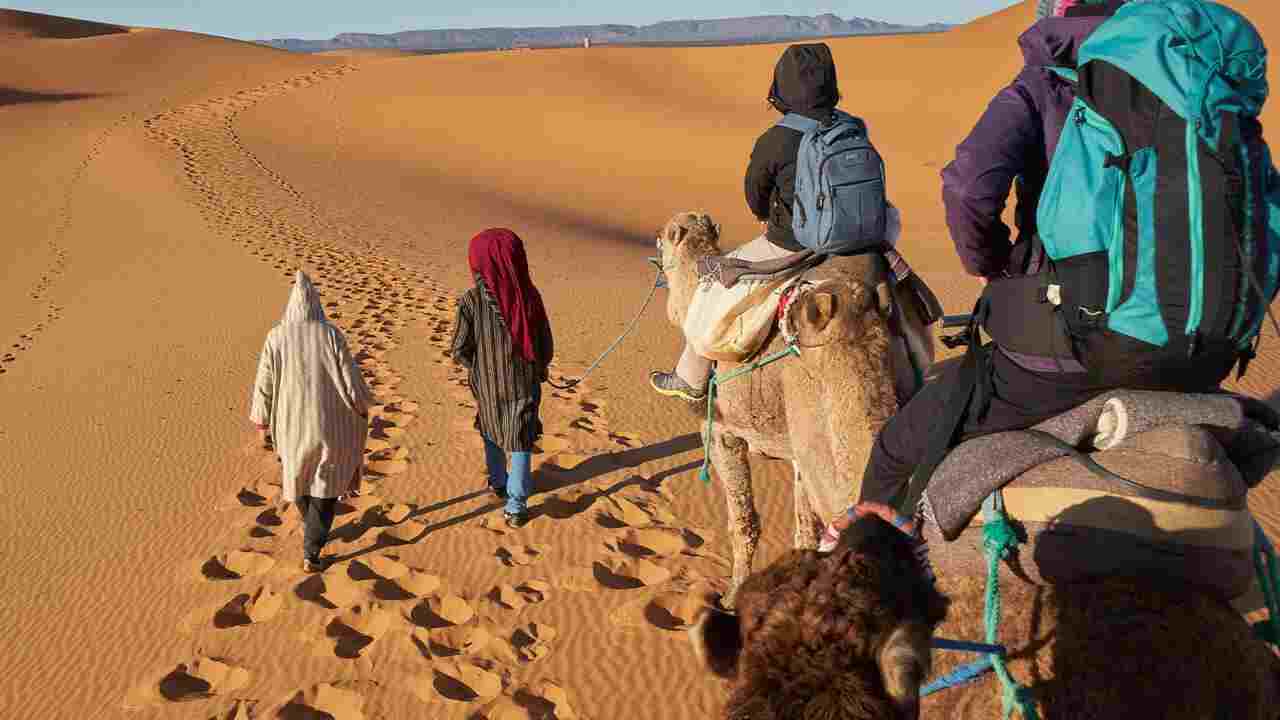
instructors and group, then transfer into the desert via 4x4 or camel (yes, really)
before ditching the vehicles and heading into the sands on foot.
What You’ll Learn
Every course is a little different, but the basics usually include:
-
Navigation by sun and stars -
Tracking animals and finding water
sources -
Fire-making without a
lighter -
Building shade and
sand shelters -
First aid for
desert conditions -
How to
ration water and food like a pro -
Mental resilience when things get tough
Some courses go deeper, teaching you how to make natural tools, identify edible
plants, or catch food. But even a 3-day course will leave you with a new respect for
both nature and your own capabilities.
The Daily Routine (Spoiler:
It's Tough)
A typical day might start at sunrise—cool, quiet, magical. After packing up your
minimalist camp, you might trek across dunes for a few miles, learn tracking signs
in the sand, and practice emergency communication signals.
Afternoons are brutally hot. This is when you set up shade, cook simple meals, and
rest. It’s also when hydration becomes real business—no one’s chugging liters here.
Every sip is measured.
Nights are cold. Like desert-cold. You’ll wrap up in layers, maybe huddle around a
small fire, and sleep under the stars or in shelters you helped build yourself.
It’s not luxurious. But it’s
real. And deeply
satisfying.
What Kind of People Sign Up?
Surprisingly? All kinds.
-
Adventure travelers looking for
something beyond the usual trip -
Outdoor
enthusiasts who want to expand their skills -
Corporate teams doing leadership
retreats (yes, seriously) -
Exhausted
professionals who want to feel alive again -
Skeptics who want to prove something to
themselves
Everyone shows up with something to learn—and something to leave behind. Whether
it’s ego, fear, or just digital overload, the desert has a way of clearing it out of
you.
What to Pack
Good news: most courses provide the essentials. But you’ll still need to come
prepared. Typical gear includes:
- Breathable clothing that covers your skin - A lightweight but durable backpack - A
wide-brimmed hat and neck scarf - Broken-in hiking boots or desert shoes -
Sunglasses and sunscreen (non-negotiable) - A headlamp (your best friend at night) -
Refillable water bottles or hydration pack - Lightweight sleeping bag or mat -
Journal—you’ll want to remember this
No fancy tech. No Netflix downloads. And definitely no hair dryers.
Is It Dangerous?
Not really—because it’s structured. You’re with trained instructors who know how to
manage the heat, the terrain, and the risks. That said, it’s still the desert:
-
Dehydration is a real concern -
Sunburn and heatstroke can creep up
on you -
Blisters become mortal
enemies -
Mental fatigue can hit
hard on day two or three
But the courses are designed to challenge, not traumatize. You’ll be pushed, not
broken. And trust me—crossing that final ridge after three days of hard work and
survival smarts? You’ll feel like a legend.
What You Come Away With
-
Confidence that goes way beyond
the desert -
A deeper connection to
nature and your surroundings -
Real-life survival skills that work
even outside the Sahara -
A stronger body
and mindset -
Stories that
destroy every "we went hiking once" humblebrag
Plus, you’ll likely come home with a new appreciation for things like shade, cold
drinks, and soft beds.
Who Shouldn’t Do It?
This isn’t for everyone. Skip it if:
- You hate sand with a fiery passion - You need clean bathrooms and regular showers
- You have serious health conditions - You’re not ready to be uncomfortable—like,
really uncomfortable