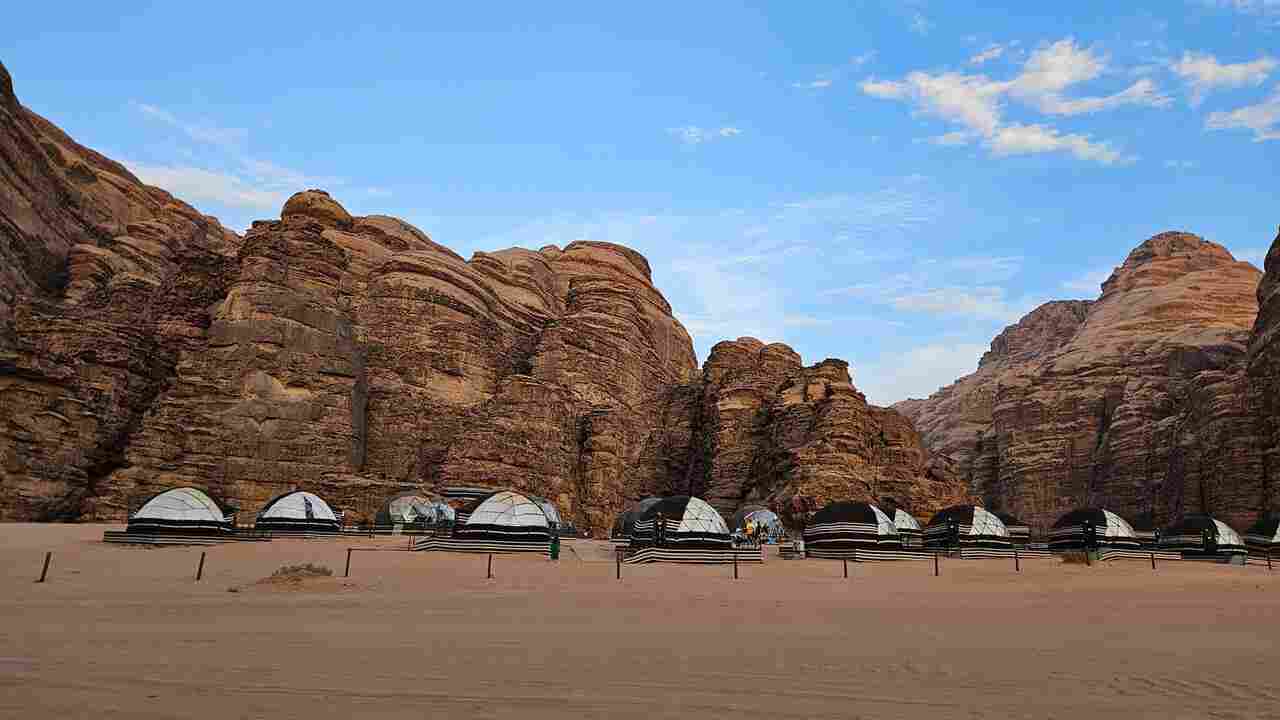
 Some places don’t just show you history—they make you feel it. That’s exactly what happens when
you visit the Wadi Rum desert in southern Jordan and spend time with the Bedouin, the nomadic people who’ve
lived there for centuries.
This isn’t a touristy sideshow or a made-for-Instagram experience (though, wow,
the photos are next level). It’s a deep dive into hospitality, simplicity, and
ancient wisdom—set in a landscape that looks more like Mars than Earth.
Here’s how to truly experience Bedouin culture in the desert—and why it’ll stay
with you long after the sand has been shaken from your boots.
Some places don’t just show you history—they make you feel it. That’s exactly what happens when
you visit the Wadi Rum desert in southern Jordan and spend time with the Bedouin, the nomadic people who’ve
lived there for centuries.
This isn’t a touristy sideshow or a made-for-Instagram experience (though, wow,
the photos are next level). It’s a deep dive into hospitality, simplicity, and
ancient wisdom—set in a landscape that looks more like Mars than Earth.
Here’s how to truly experience Bedouin culture in the desert—and why it’ll stay
with you long after the sand has been shaken from your boots.
Who Are the Bedouin?
The Bedouin (from the Arabic word
badawi,
meaning “desert dweller”) are traditionally nomadic tribes spread across the Middle
East and North Africa. In Jordan, many Bedouin still live in or near the desert,
especially in places like
Wadi Rum
and
Petra.
While modern life has changed some aspects of their lifestyle—many now have pickup
trucks and mobile phones—their values of hospitality, storytelling, simplicity, and
deep connection to the land remain strong.
Where to Go
The most immersive place to experience Bedouin culture is
Wadi Rum, also known as the Valley of
the Moon. This protected desert area is famous for its red sands, towering rock
formations, and ancient petroglyphs. It’s also home to several Bedouin-run camps
that welcome travelers with open arms.
You can also connect with Bedouin hosts in
Petra,
Dana Biosphere Reserve, or the remote
areas of the
Eastern Desert, but
Wadi Rum offers the most accessible and holistic introduction.
What a Typical Experience
Looks Like
After arriving in Wadi Rum village, you’ll likely hop into the back of a dusty 4x4
truck driven by your Bedouin guide. Then you’ll head out into the wide, silent
desert, watching civilization disappear behind you.
Your day might include:
- Visiting ancient rock carvings and Nabatean ruins - Scrambling up sand dunes and
natural stone bridges - Drinking sweet Bedouin tea (with sage and sugar) under a
canvas tent - Hearing stories of camel caravans, tribal life, and stargazing
traditions
At night, you’ll eat a traditional
zarb dinner (meat and veggies
slow-cooked in an underground pit), sit around a fire, and listen to your host play
the
rababa, a one-stringed
instrument that somehow conveys more emotion than a full orchestra.
And when you look up? The Milky Way looks close enough to touch.
It’s About the People, Not
Just the Landscape
Yes, the desert is stunning. But what makes this experience unforgettable are the
Bedouin hosts who share it with
you.
They don’t just guide. They
welcome. They call you
akhi (brother) or
ukhti (sister). They make sure you’re fed,
hydrated, and maybe even laughing at their sly desert humor.
They’ll teach you how to tie a keffiyeh. They’ll show you how to spot a scorpion
trail in the sand. They’ll explain the traditional desert rules of honor,
hospitality, and freedom.
In a world of fast-paced travel, it’s a pause button—and a window into a slower,
deeper way of life.
What You’ll Eat
Bedouin food is simple, hearty, and made to nourish in extreme conditions. Expect:
-
Zarb: slow-cooked meat, potatoes,
and veggies -
Mansaf: lamb cooked
in fermented yogurt, served over rice and flatbread -
Shrak bread: thin and fire-baked on a
metal dome -
Dates, hummus, labneh,
and loads of
sweet tea
Meals are communal. You eat with your hands. You share. You laugh. And somehow, it
all tastes better with sand between your toes.
Where You’ll Sleep
Most Bedouin camps offer private tents with mattresses, wool blankets, and simple
bathrooms. Some have hot showers. Others? Not so much.
Want something more authentic? Ask about
wild camping, where you sleep on a mat
under the stars with no Wi-Fi, no noise, and nothing but the desert wind.
The stillness is unreal. The stars? Even more so.
What You’ll Learn
-
How to slow down. No one’s
rushing in the desert. You’ll get used to it. -
How to observe. Bedouins can read the
land like a book. You’ll start to notice wind shifts, light changes, and silent
cues. -
How to listen. Storytelling
is an art form here. And every person has a story. -
How to connect. Even without perfect
language, you’ll feel understood.
You might show up a stranger. You’ll leave feeling like family.
Tips for a Meaningful Visit
-
Go with a Bedouin-owned tour or
camp. Many agencies use their names but aren’t actually run by locals.
Look for verified reviews and ask directly. -
Pack warm clothes. The desert gets
cold at night, especially in winter. -
Respect the culture. Modest dress and
curiosity go a long way. -
Bring an
offering. A small gift—tea, sweets, or even a photo book—can be a
beautiful gesture. -
Put your phone
away. Just for a while. Let the silence do its thing.
Experiencing Bedouin culture in Jordan isn’t about checking off a bucket list item.
It’s about
presence. It’s about
human connection that goes beyond Wi-Fi and filters.